Know where attention is needed
Give leaders and teams a shared view of property, program, and project status, reducing the work needed to prepare an informed update.
Explore Visibility →Use Rover, Sherpa, or Atlas independently, starting with the workflow that matters most to your team. Connect them when you want to carry opportunity decisions into delivery and asset oversight.
When information and responsibilities are scattered, progress is harder to see and harder to explain. SEIN helps your team connect the decision, the work, and the evidence behind it.

Work toward less administrative effort, clearer accountability, and better use of existing assets. Connect the decisions and delivery behind those results across programs, projects, and portfolios.
Give leaders and teams a shared view of property, program, and project status, reducing the work needed to prepare an informed update.
Explore Visibility →Keep approvals, owners, and partner commitments connected so the next step is clear and fewer handoffs stall.
Explore Alignment →Follow milestones and exceptions while there is time to respond, helping teams direct effort and capital toward the outcomes that matter.
Explore Execution →Picture a housing program team handling applications across properties, partners, eligibility reviews, and project delivery. The scenario below shows how a connected workflow could change the daily experience.
An applicant asks why a request is still in review. The eligibility record is in one place, the property history in another, and the next approval sits with a different team. Staff spend time reconciling updates before anyone can move the work forward.
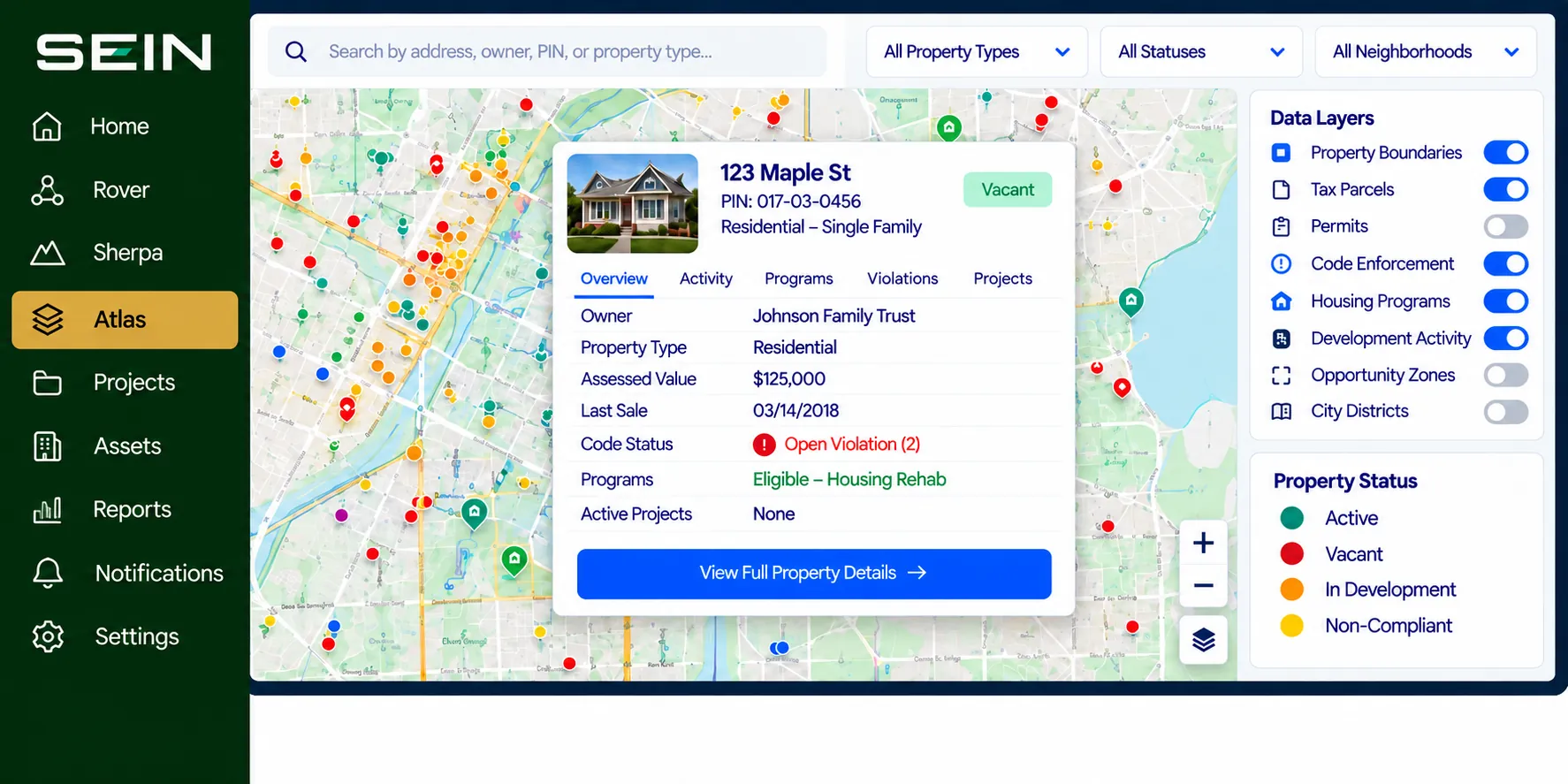
Rover keeps the application, missing information, review stage, and decision owner together. Atlas provides the relevant property context. If approved work becomes a project, Sherpa tracks milestones, documents, and the next responsible party.
The team can see the reason for the delay, assign follow-up, and review progress without reconstructing the history. During implementation, SEIN and the customer would measure whether review time and reporting effort actually improve.
Compare the time to answer an application-status question, the share of handoffs with an assigned owner, and the effort to prepare a program update before and after the workflow is in use.
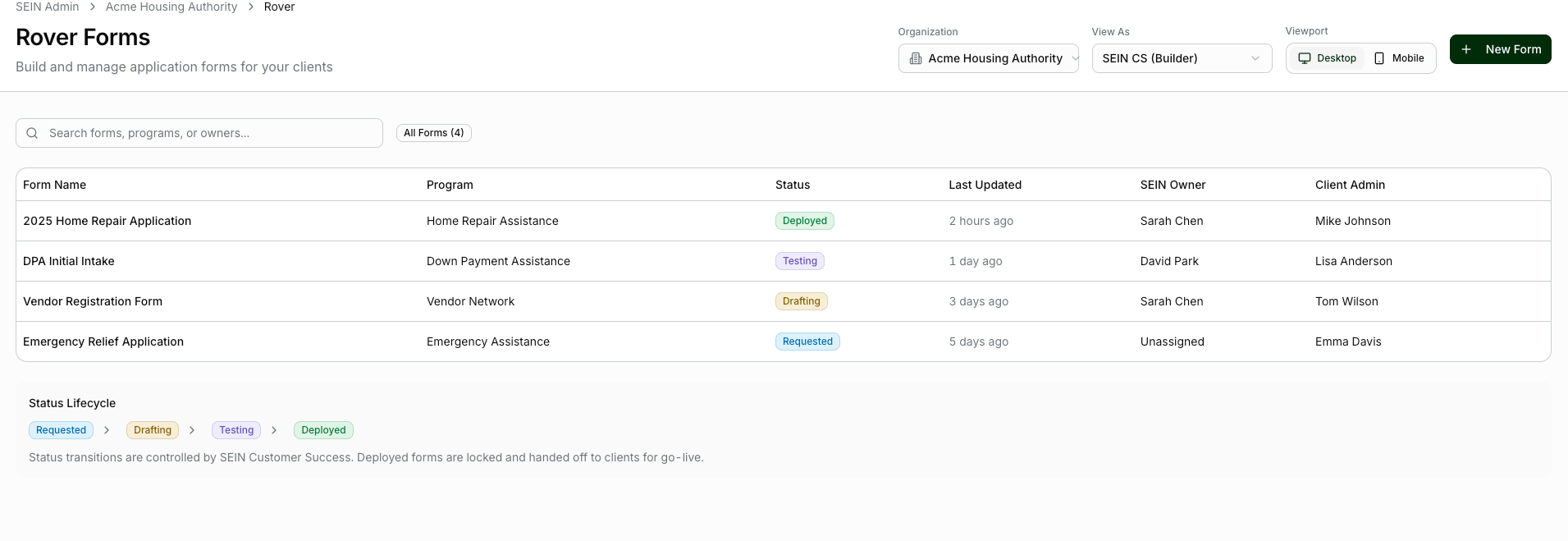
Applicants, partners, and internal reviewers need a process they can follow. Rover helps organize opportunities, review steps, and decisions before approved work moves into delivery.
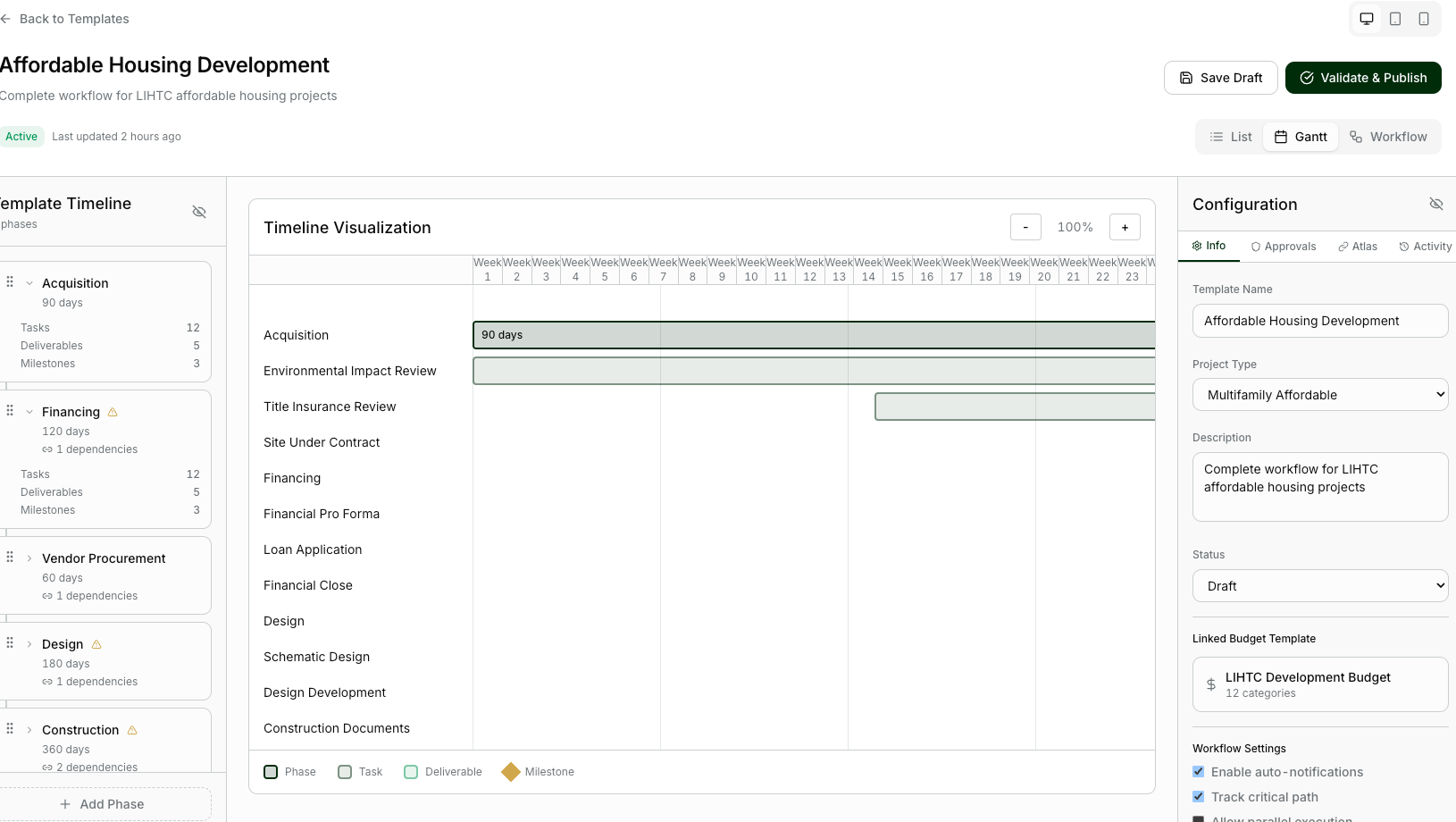
Once a decision is made, teams need to coordinate the people, dates, and deliverables behind it. Sherpa supports a shared view of the work and its dependencies.
When records live across systems, teams spend time gathering context before they can make a decision. A shared property or portfolio view can put the relevant facts and activity together.
The right measures vary by team. These examples give a prospective customer and SEIN a concrete starting point for an assessment or proof of value.
Measure the staff time spent preparing a recurring program, project, or portfolio update.
Baseline → time per reportMeasure elapsed time from a complete intake to a documented decision, including where work waits.
Baseline → days in reviewMeasure how long it takes to identify and assign a project delay, missing document, or changed milestone.
Baseline → time to actionMeasure the share of active items with a responsible owner and a recorded next step.
Baseline → handoff coverageThese are example measures. We define the exact ones with each customer during the assessment.
An operations assessment starts with your process and current baseline. Together, we identify what should improve, how to measure it, and which information can substantiate the result.
Record the current workflow, effort, delays, and visibility gaps.
Choose a real program or project and the decisions that matter most.
Agree on useful measures such as review time, milestone visibility, reporting effort, or exceptions.
Compare before and after using documented evidence before sharing any customer result.
Can staff find the property context, responsible department, and next action without chasing separate updates?
See the government page →Can teams see where execution has changed from underwriting and explain that change to investors?
See the asset managers page →Can funders follow a commitment into the project work and documented community outcomes it supports?
See the CDFI page →These use cases outline potential workflows. Success measures are agreed with each customer.
The best outcome depends on adoption and dependable information. In an assessment, SEIN reviews which systems hold the relevant records, which team owns each decision, and how the workflow should fit the people doing the work.
Specific integrations, mobile workflows, implementation timing, and results are confirmed for each organization.

We’ll examine the current operation and define a practical path to clearer decisions and delivery.