Site pipeline fragmentation
Location assumptions and landlord discussions live in separate places.
Retail real estate teams evaluate markets and sites, coordinate landlords and vendors, and bring stores through buildout and opening across many locations.

Retail real estate teams evaluate markets and sites, coordinate landlords and vendors, and bring stores through buildout and opening across many locations.
“Where is the next store blocked, and what should we learn before choosing another site?”
SEIN can help connect the relevant information, people, and work. The right workflow depends on your current systems and operating model.
These are common operating challenges to explore with your team. Their scope and priority vary by organization.
Location assumptions and landlord discussions live in separate places.
Permits, fixtures, vendors, and handoffs affect the opening date.
Existing locations and new sites are difficult to compare.
The goal is to make your team’s decisions and handoffs easier to follow, with information that supports the work.
Review existing stores alongside proposed locations and active work.
Give site selection a consistent decision record.
Coordinate buildout dependencies before they affect opening readiness.
Start with Rover, Sherpa, or Atlas based on your needs. Each product works independently; connect them when it helps your team carry decisions into delivery and ongoing oversight.
Three product roles connect decisions, execution, and insight. The sequence and configuration depend on the work your team needs to run.
 Rover
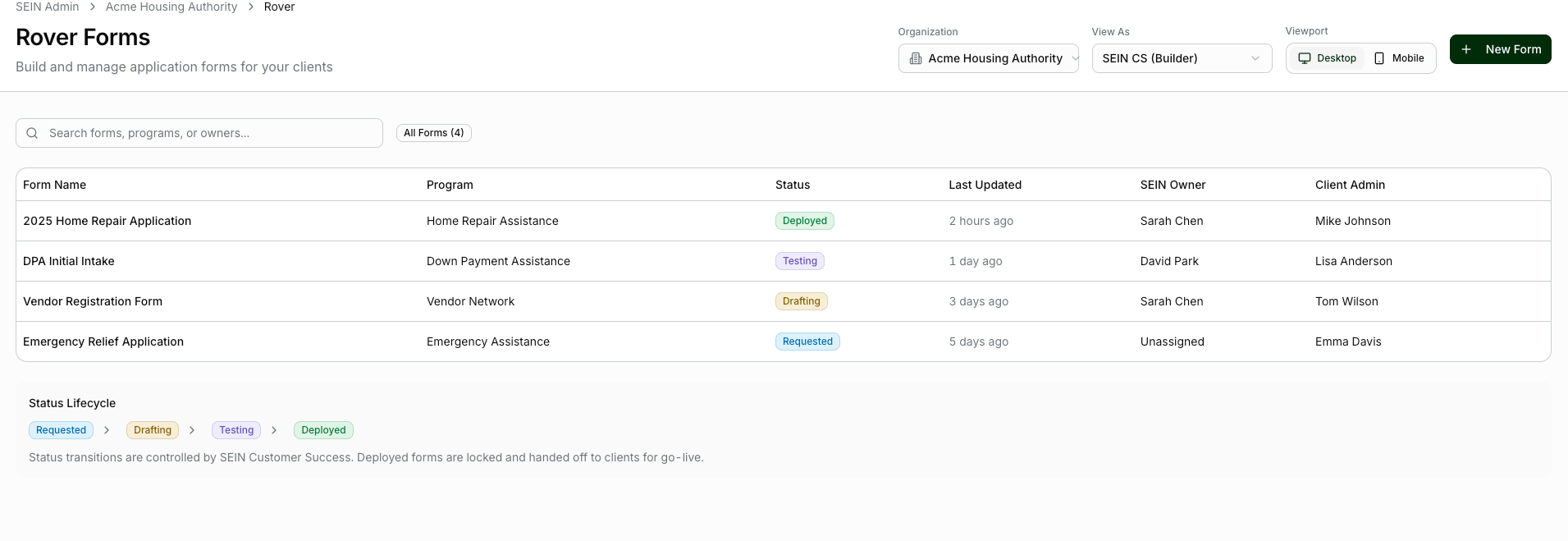
Organize market analysis, candidate sites, landlords, diligence, and approval decisions.
Use Case: Market and site selection
Outcome to pursue: Give site selection a consistent decision record.
Sherpa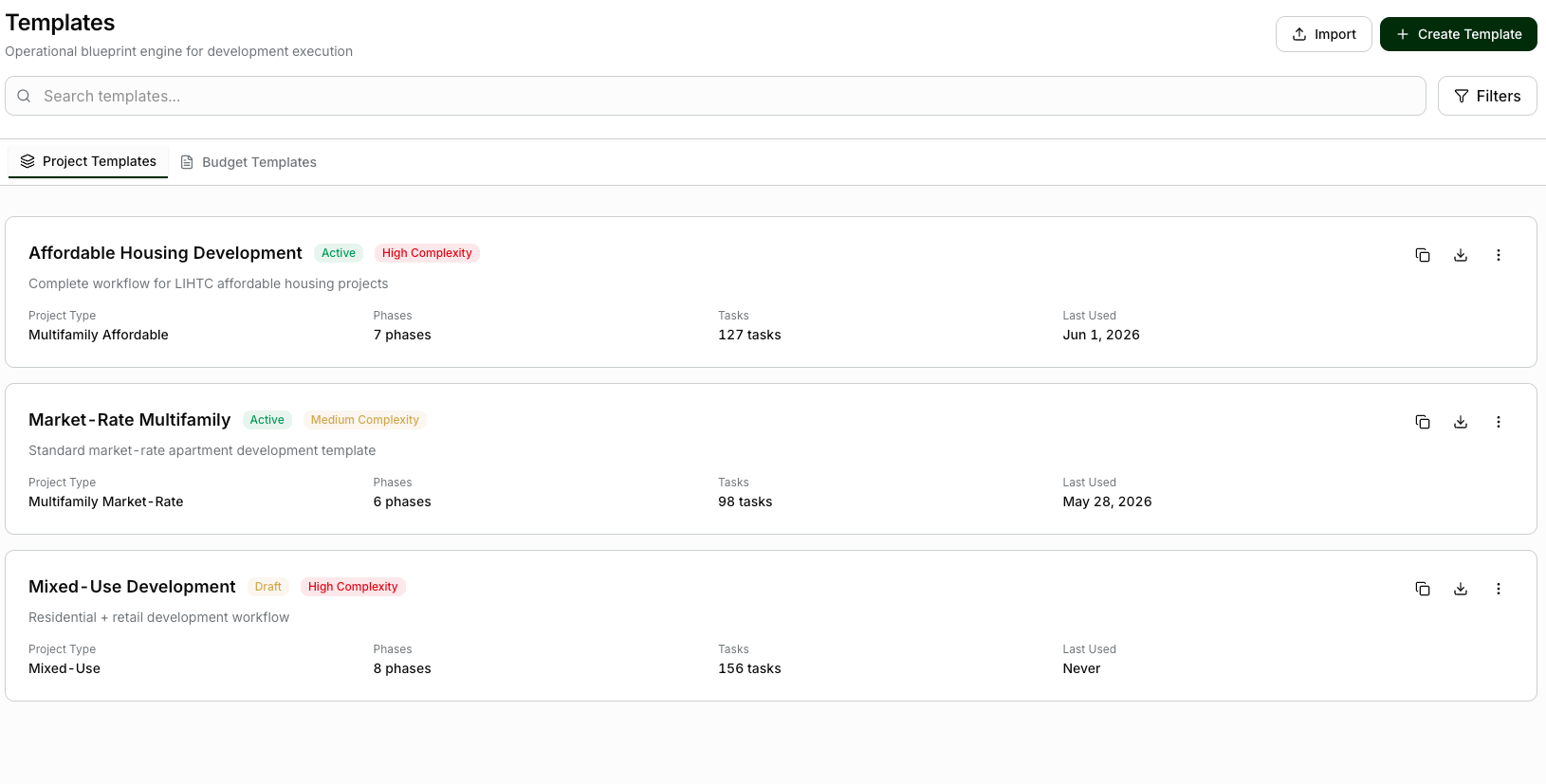
Track buildout, permits, vendor work, fixtures, and opening milestones.
Use Case: Store buildout and opening
Outcome to pursue: Coordinate buildout dependencies before they affect opening readiness.
Atlas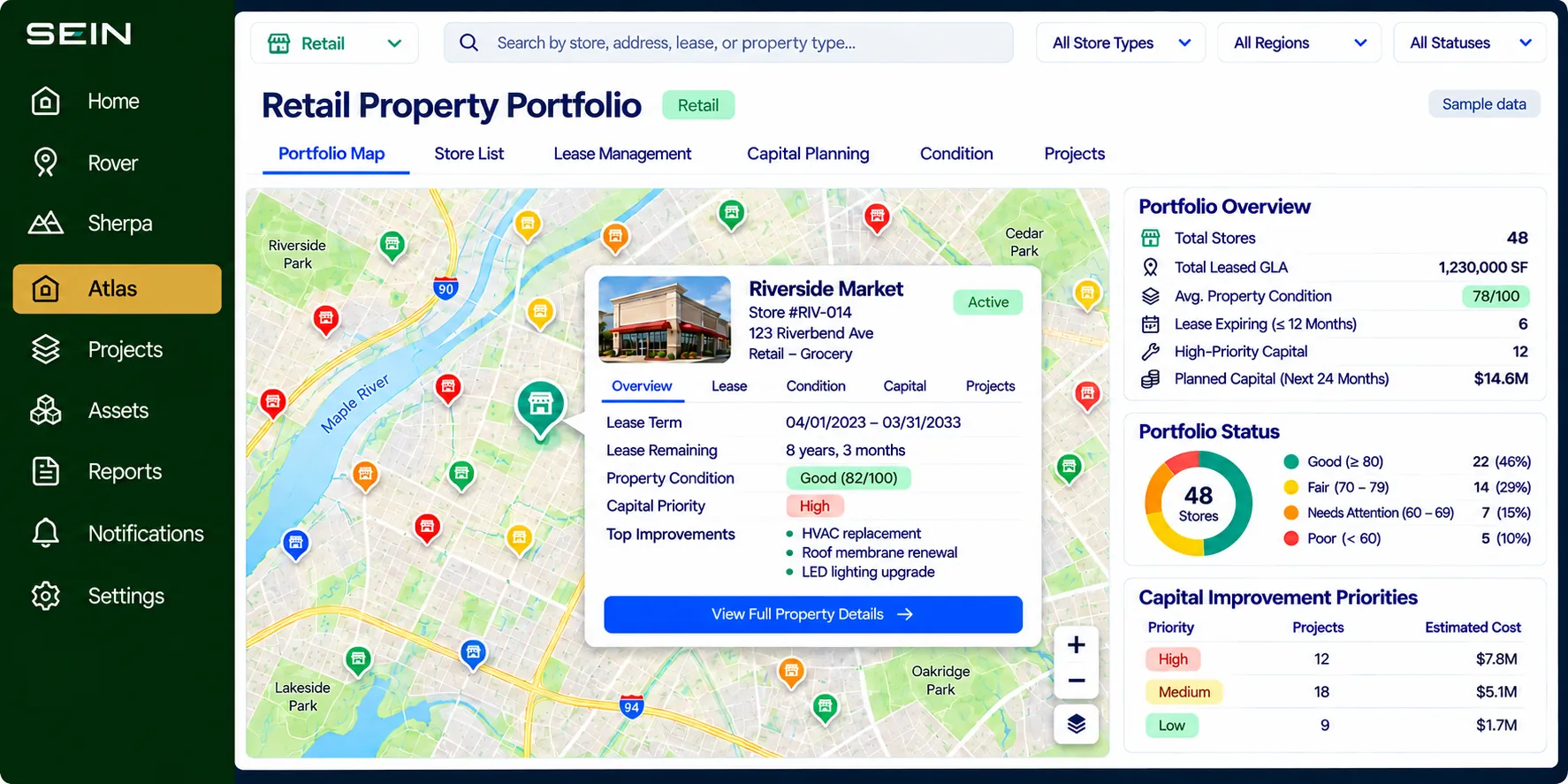
Review location information and available store context across the portfolio.
Use Case: Store and site portfolio context
Outcome to pursue: Review existing stores alongside proposed locations and active work.
A retailer assesses a new market. Rover records site criteria, landlord terms, diligence, and approval status.
Discussion Prompt: What information would your team need at this decision?A fixture delivery slips. Sherpa identifies dependent tasks and the revised opening plan.
Discussion Prompt: Which handoff or exception is hardest to track?Atlas helps compare existing stores, proposed locations, and active projects using available property and operating data.
Discussion Prompt: What evidence would make this review more useful?Connect location choices, landlord and vendor responsibilities, and opening milestones so teams can see exceptions and prepare updates with less effort.
Connect location context and improvement work to identify opportunities for reuse, renovation, and more informed capital allocation.
In an operations assessment, we map how opportunities enter, who makes decisions, what happens after approval, and which records your team relies on. We then define the right product scope and implementation path together.
Start with one workflow that matters.
Define stages and roles, connect the required information, validate the handoffs with users, then expand to related work as the process proves useful.
Tell us where work gets stuck. We’ll explore where SEIN could help.