Inconsistent impact tracking
Borrower performance, program measures, and community outcomes are often tracked differently across systems.
CDFIs need a clear view from mission-aligned opportunity to funded project and documented community outcome. SEIN connects the decisions, delivery work, and evidence behind each investment.

CDFIs need a clear view from mission-aligned opportunity to funded project and documented community outcome. SEIN connects the decisions, delivery work, and evidence behind each investment.
“Where is capital committed, which projects need attention, and what outcomes can we substantiate?”
SEIN can help connect the relevant information, people, and work. The right workflow depends on your current systems and operating model.
Inconsistent impact measures, high-touch portfolio management, fragmented borrower and project records, and different reporting requests can make growth harder to manage.
Borrower performance, program measures, and community outcomes are often tracked differently across systems.
Staff chase individual project updates and reconcile spreadsheets to oversee a growing portfolio.
Funders, regulators, and internal leaders may need different views of the same underlying work.
The goal is to make your team’s decisions and handoffs easier to follow, with information that supports the work.
Substantiate the connection between committed capital and community outcomes.
Select opportunities using mission priorities and documented diligence.
Follow funded work and use-of-funds documentation with less status chasing.
Start with Rover, Sherpa, or Atlas based on your needs. Each product works independently; connect them when it helps your team carry decisions into delivery and ongoing oversight.
Three product roles connect decisions, execution, and insight. The sequence and configuration depend on the work your team needs to run.
 Rover
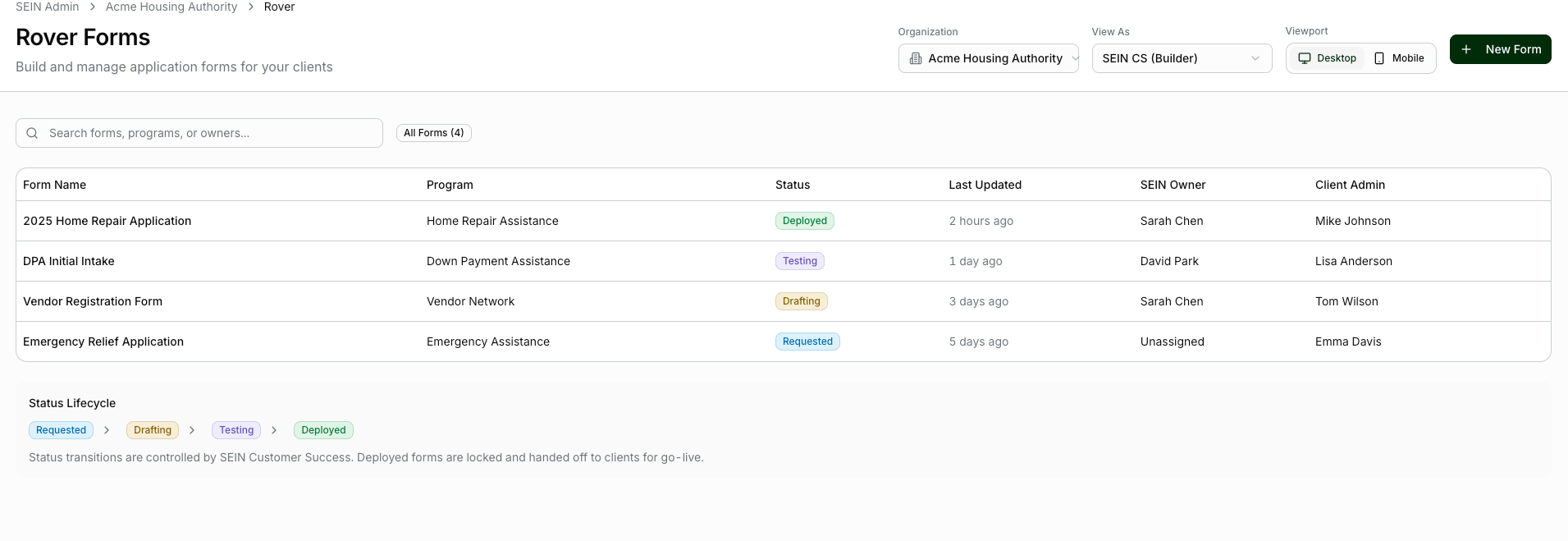
Capture mission-aligned opportunities, borrower information, qualification, diligence, and funding decisions.
Use Case: Mission-aligned investment pipeline
Outcome to pursue: Select opportunities using mission priorities and documented diligence.
Sherpa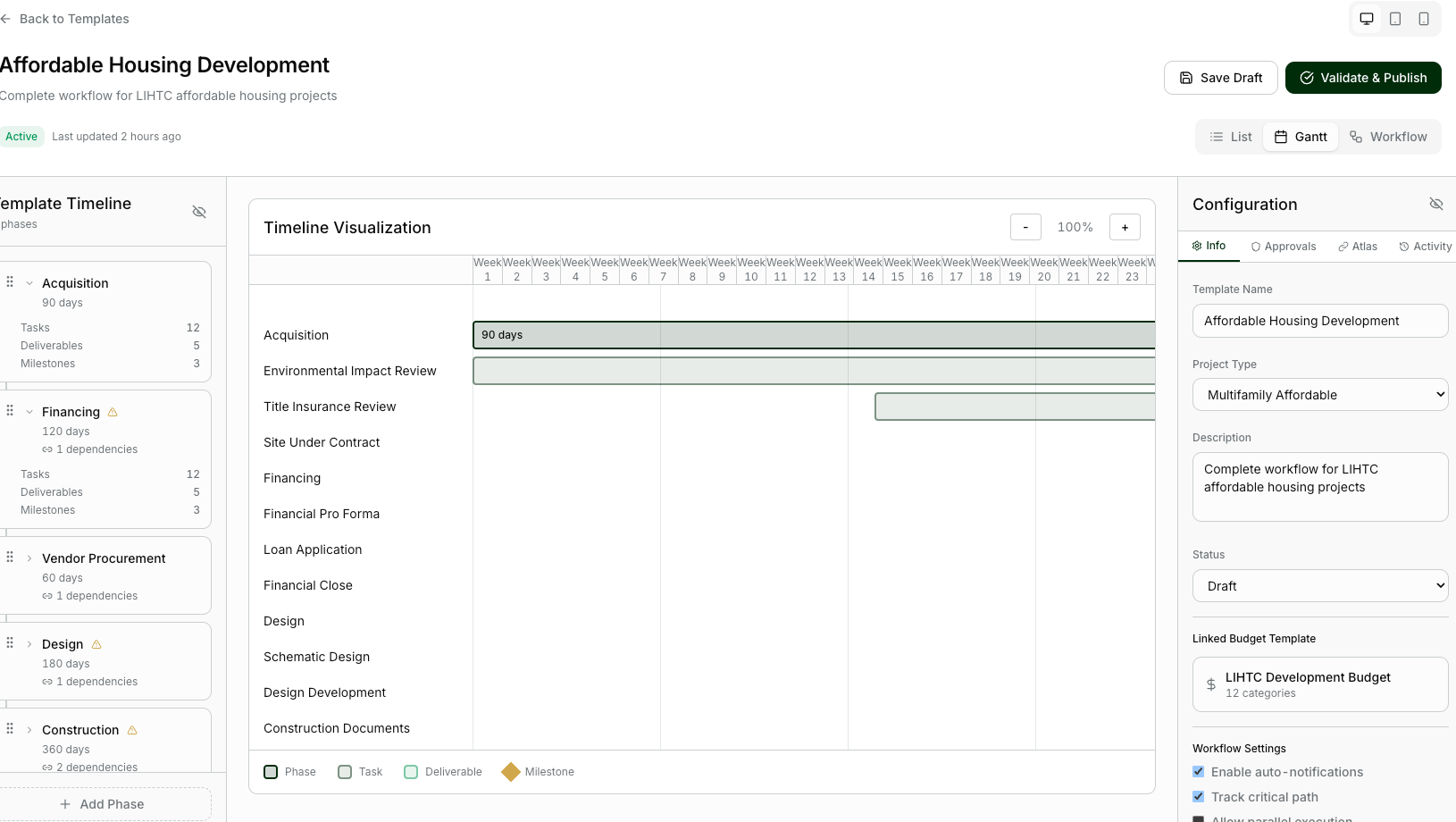
Follow funded projects, agreed milestones, use-of-funds documentation, and exceptions.
Use Case: Funded project monitoring
Outcome to pursue: Follow funded work and use-of-funds documentation with less status chasing.
Atlas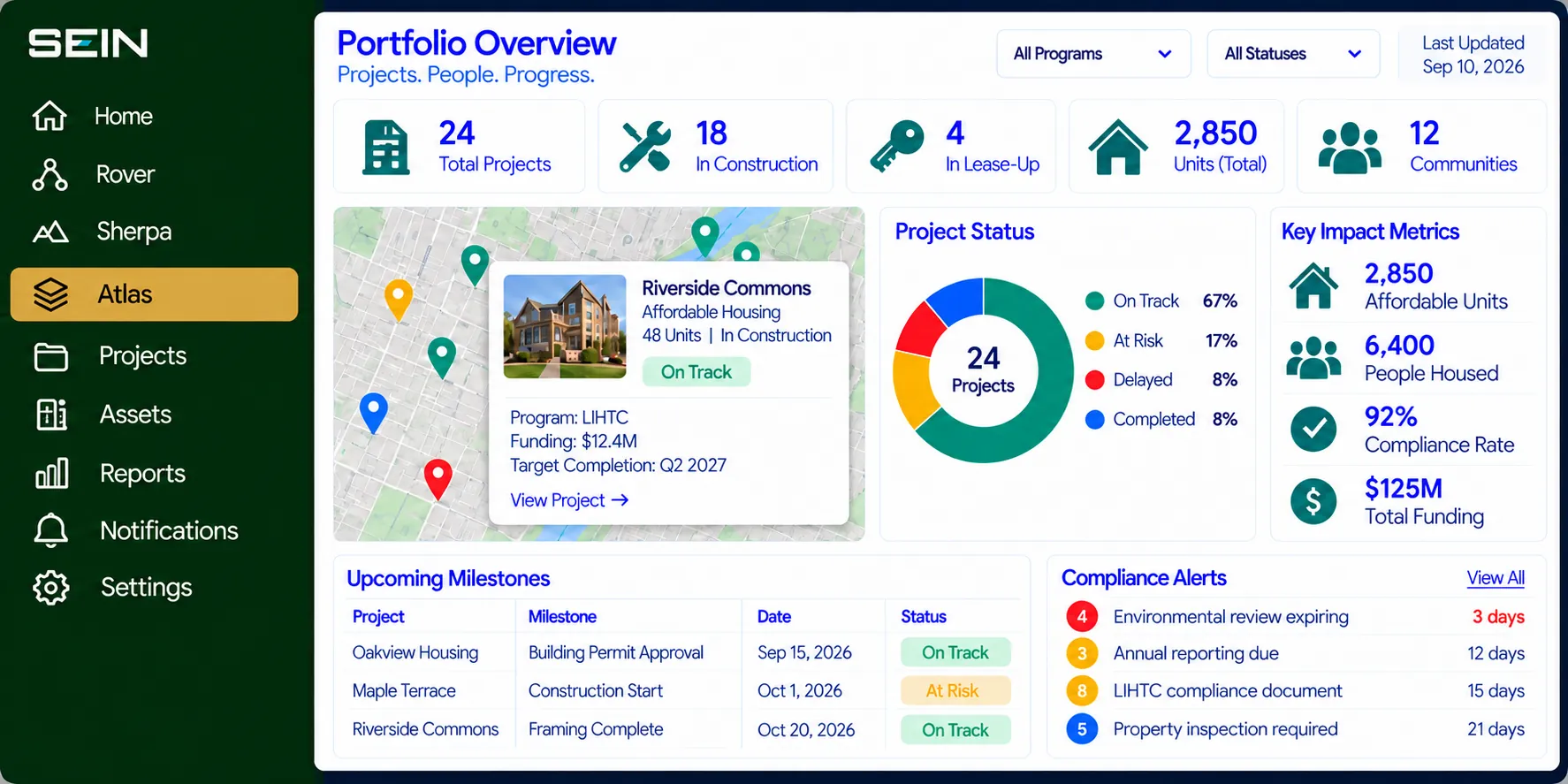
Review investments, properties, borrower and asset performance, and documented outcomes across the portfolio.
Use Case: Capital-to-impact reporting
Outcome to pursue: Substantiate the connection between committed capital and community outcomes.
Explore how your team could use SEIN to address these challenges. Workflows, data sources, and success measures are defined around your operation.
The Challenge: A borrower seeks financing for a community housing project. The team must review mission alignment, eligibility, outstanding diligence, and partner readiness together.
How SEIN helps: Rover organizes the opportunity, review inputs, documents, and decision owners. When an opportunity advances, its agreed delivery commitments move into Sherpa for follow-up.
What better looks like: A traceable funding decision and a clearer handoff from opportunity review to project oversight.
The Challenge: A financed project involves a borrower, development partners, and several capital sources. A missed milestone triggers separate requests for updates.
How SEIN helps: Sherpa connects the milestone, required documents, responsibilities, and agreed follow-up. Atlas keeps the funded project in the wider portfolio context for review.
What better looks like: A shared view of the exception and next action, supporting oversight as the portfolio grows.
The Challenge: A funder asks what a housing investment has delivered. Committed capital, borrower updates, project status, and completed-unit evidence sit in different places.
How SEIN helps: Atlas brings available asset and outcome information into context with the capital decision in Rover and delivery records in Sherpa. Staff review metric definitions and supporting evidence before reporting.
What better looks like: A clearer distinction between committed capital, active delivery, and documented community outcomes.
Bring opportunity reviews, partner commitments, and funded project updates together to reduce reporting effort and strengthen investment oversight.
In an operations assessment, we map how opportunities enter, who makes decisions, what happens after approval, and which records your team relies on. We then define the right product scope and implementation path together.
Start with one workflow that matters.
Define stages and roles, connect the required information, validate the handoffs with users, then expand to related work as the process proves useful.
Tell us where work gets stuck. We’ll explore where SEIN could help.